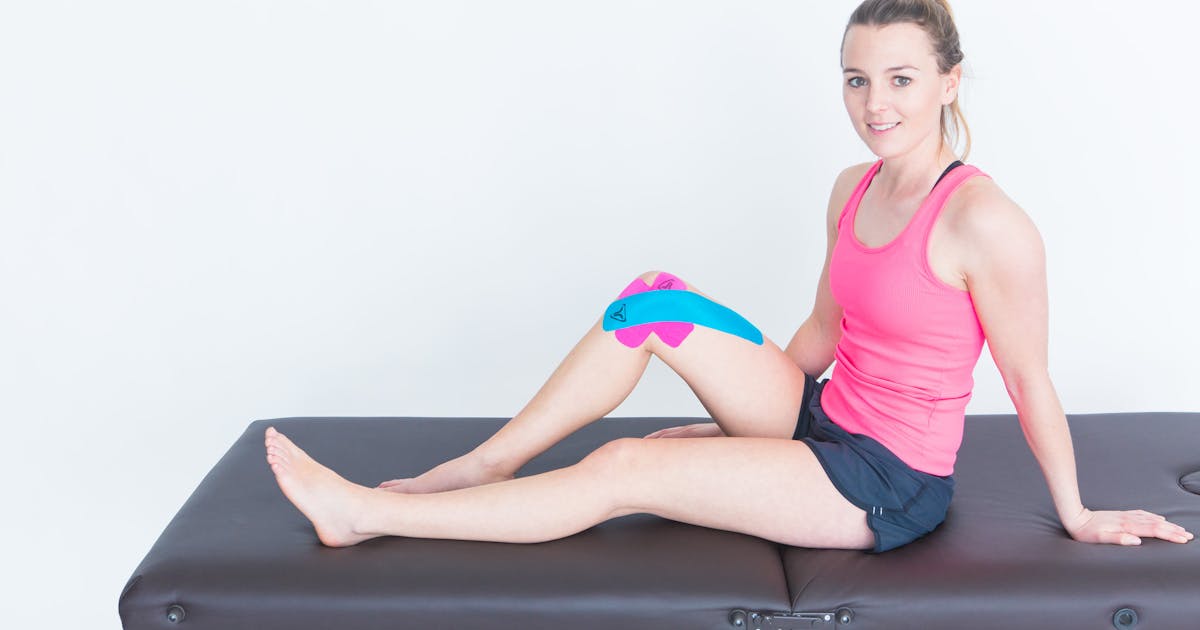
Taping the Inner Knee: Supporting Meniscus & Ligaments for Stability and Pain Relief
The knee joint, a marvel of biomechanical engineering, is undeniably one of the most frequently injured joints, whether you're an athlete pushing limits or simply navigating daily life. Its complex structure and constant exposure to load make it vulnerable to various ailments. When pain strikes, particularly on the inner side of the knee, it can be debilitating, impacting everything from walking to high-performance sports. But what exactly causes this discomfort, and more importantly, how can we effectively alleviate it? This article delves into the intricate anatomy of the knee, explores common causes of inner knee pain, and introduces you to the powerful technique of kinesiology taping – a proven method to provide support, reduce discomfort, and promote healing, especially when you need to Knie Tapen Bei Schmerzen Innen.
Understanding the Knee's Complex Architecture: A Foundation for Healing
To effectively address inner knee pain, it's essential to appreciate the joint's sophisticated design. The knee is not just a simple hinge; it's a dynamic assembly of bones, ligaments, tendons, and cartilage, all working in harmony to provide both stability and impressive flexibility. The main bony components include the
- The Patella's Pivotal Role: Often described as a sesamoid bone, the patella acts like a pulley, enhancing the leverage of the quadriceps muscles. This unique function allows for efficient force transmission and helps distribute weight across the joint, enabling both high load-bearing capacity and a wide range of motion.
- Joint Compartments: The knee is actually comprised of two distinct articulations:
- The Femoropatellar joint, formed between the femur and the patella.
- The Femorotibial joint, connecting the femur and the tibia.
Beyond the bones, a network of soft tissues provides critical reinforcement:
- Ligaments: These tough, fibrous bands connect bones to bones, offering essential stability.
- The Cruciate Ligaments (anterior and posterior) are vital for preventing the tibia from sliding too far forward or backward relative to the femur, ensuring stability in the horizontal plane.
- The Collateral Ligaments (medial and lateral) are crucial for preventing excessive side-to-side movement. The Medial Collateral Ligament (MCL), located on the inner side of the knee, is particularly relevant for inner knee pain, as it prevents the knee from collapsing inward. Injuries to the MCL are a common source of discomfort in this region.
- Menisci: These two C-shaped cartilaginous discs – the medial meniscus (inner) and lateral meniscus (outer) – sit between the femur and tibia. They act as vital shock absorbers, evenly distributing weight and reducing friction, making them critical for the joint's longevity. Injuries to the medial meniscus are a frequent culprit behind inner knee pain.
- Muscles and Tendons: A total of eight muscles surround the knee, with their associated tendons attaching them to bone. These muscles (e.g., quadriceps, hamstrings, gastrocnemius) provide dynamic stability and facilitate movement. Overuse or strain in these muscle groups and their tendons can also manifest as pain around the knee, including the inner aspect.
- Joint Capsule: Encapsulating the entire joint, this structure further contributes to stability and encloses the synovial fluid necessary for lubrication.
Given this intricate setup, it's clear why the knee is susceptible to injury. When you experience pain on the inner side, it often points to issues with the medial meniscus, the medial collateral ligament, or adjacent soft tissues. This is precisely where knowing how to Knie Tapen Bei Schmerzen Innen becomes a game-changer.
Understanding Inner Knee Pain: Common Causes and How Taping Can Help
Pain on the inner side of the knee (medial knee pain) can stem from various sources, ranging from acute injuries to chronic overuse conditions. Identifying the cause is the first step towards effective treatment. Some of the most common culprits include:
- Medial Meniscus Injuries: The medial meniscus is frequently injured due to twisting motions, direct impact, or degenerative changes over time. Tears can range from minor to severe, causing sharp pain, swelling, clicking, or a catching sensation, especially during knee flexion and rotation.
- Medial Collateral Ligament (MCL) Sprains/Tears: The MCL is typically injured by a direct blow to the outside of the knee or by a strong valgus (knock-kneed) force, often seen in contact sports. Symptoms include pain, tenderness along the inner knee, swelling, and instability, particularly when the knee is stressed sideways.
- Pes Anserine Bursitis: This condition involves inflammation of the bursa located on the inner side of the knee, just below the joint line, where the sartorius, gracilis, and semitendinosus tendons attach. It's common in runners and can cause localized pain and tenderness.
- Medial Plica Syndrome: The plica is a fold in the synovial membrane of the knee. If it becomes irritated or inflamed, it can cause pain, clicking, or a snapping sensation on the inner side of the knee.
- Osteoarthritis: Degeneration of the cartilage in the medial compartment of the knee can lead to chronic inner knee pain, stiffness, and reduced mobility.
Kinesiology taping offers a versatile and non-invasive approach to managing these conditions. By applying elastic tape to the skin, several therapeutic effects are achieved:
- Pain Reduction: The tape gently lifts the skin, decompressing underlying tissues and reducing pressure on pain receptors. This can provide immediate relief and make movement more comfortable.
- Structural Support: While not immobilizing, the tape provides external support to weakened ligaments or injured menisci, helping to stabilize the joint and protect it from further strain without restricting range of motion.
- Improved Proprioception: The constant sensory input from the tape enhances the body's awareness of joint position, encouraging better movement patterns and muscle activation.
- Reduced Swelling & Bruising: The lifting action of the tape can create more space for lymphatic drainage and blood flow, aiding in the reduction of swelling and accelerating the healing process.
Whether you're dealing with an acute sprain or chronic irritation, understanding how to Knie Tapen Bei Schmerzen Innen: Effektive Linderung für mediale Knieprobleme can be a significant step towards recovery and improved function.
The Science Behind Kinesiology Taping for Inner Knee Support
Kinesiology tape, unlike traditional athletic tape, is designed to be highly elastic, breathable, and water-resistant. Its unique properties allow it to mimic the elasticity of human skin and muscles, enabling full range of motion while providing therapeutic benefits. The material itself is typically cotton with an acrylic adhesive, making it hypoallergenic and suitable for prolonged wear, even during sports or showers.
When applied correctly, kinesiology tape creates a gentle lifting effect on the skin. This microscopic lift decompresses the layers of tissue beneath the tape, which has several profound effects:
- Enhanced Circulation: By creating more space, the tape facilitates improved blood flow to the injured area, bringing essential nutrients for healing and carrying away metabolic waste products.
- Improved Lymphatic Drainage: Similarly, the lift helps open up lymphatic pathways, which are crucial for reducing swelling and inflammation.
- Sensory Input & Proprioception: The constant stretch and recoil of the tape against the skin stimulates mechanoreceptors, nerve endings responsible for proprioception (the sense of where your body parts are in space). This increased sensory feedback helps the brain better understand the knee's position and movement, promoting more controlled and protective muscle activation.
- Muscle and Fascial Support: Depending on the direction and tension of application, the tape can either facilitate (stimulate) or inhibit (relax) muscles. For ligaments and meniscal support, higher tension is often used to provide direct mechanical support and protect against overstretching.
For inner knee pain, this means the tape can be strategically applied to support the medial collateral ligament, gently offload the medial meniscus, or reduce tension in the muscles contributing to Pes Anserine Bursitis. The key lies in understanding the specific injury and applying the tape with the appropriate tension and direction. For a broader perspective on the advantages of this technique, you might find our article Heile deine inneren Knieschmerzen: Ein Leitfaden für Kinesio-Taping very insightful.
Practical Guide: Taping the Inner Knee for Meniscus and Ligament Support
While professional application by a physical therapist or medical practitioner is always recommended for diagnosis and precise taping, understanding the general principles can empower you to provide self-support. Before you begin, ensure the skin is clean, dry, and free of oils or lotions. For optimal adhesion, round the edges of your tape strips to prevent them from peeling prematurely.
Taping Technique for Medial Meniscus or MCL Support (Ligament Technique)
This technique aims to provide targeted support to the medial structures, limiting excessive movement and offering pain relief. It's particularly effective when you need to Knie Tapen Bei Schmerzen Innen due to ligament sprains or meniscal irritation.
- Preparation:
- Cut one "I" strip of kinesiology tape, approximately one hand's length (about 20-25 cm).
- Have the individual sit with their knee slightly bent (around 10-20 degrees). This position stretches the tissues around the inner knee slightly, allowing for effective tape application.
- Application:
- Anchor Point: Find the exact spot of pain or tenderness along the inner knee joint line, where the MCL or medial meniscus is located.
- Step 1 (First Anchor): Tear the paper backing about 2-3 cm from one end of the tape. Without any stretch, apply this anchor directly over the tender spot or just slightly below it on the shin bone (tibia) side. Ensure the tape is running parallel to the direction of the MCL.
- Step 2 (Maximal Tension): With the anchor firmly in place, peel the rest of the paper backing while applying maximal comfortable tension (around 75-100% stretch) to the tape. Carefully pull the tape upwards and slightly backward, following the line of the MCL or medial meniscus, wrapping it around the inner side of the knee joint.
- Step 3 (Final Anchor): Apply the last 2-3 cm of the tape without any tension, ensuring it adheres smoothly to the skin on the thigh bone (femur) side, above the knee joint.
- Activate Adhesive: Gently rub the entire strip to activate the heat-sensitive adhesive, ensuring good contact with the skin.
- Additional Considerations:
- For broader support or if pain radiates, you might consider adding a second "I" strip in a crosshatch pattern over the first, or a "Y" strip to encompass specific muscle groups that may be contributing to the issue.
- Always ensure the tape does not create excessive pressure or restrict circulation. If numbness, tingling, or increased pain occurs, remove the tape immediately.
Important Note: While this guide provides a basic technique, successful taping often requires precise anatomical knowledge and understanding of injury mechanics. If you're unsure about the cause of your inner knee pain or how to tape correctly, consult with a physiotherapist, sports doctor, or another qualified healthcare professional. They can provide an accurate diagnosis and demonstrate the most effective taping strategy for your specific condition.
Beyond Taping: Holistic Approaches to Knee Health
While taping can offer significant relief and support, it's crucial to integrate it into a comprehensive approach to knee health. Taping is a tool, not a cure-all. To truly heal and prevent future issues, consider the following:
- RICE Protocol for Acute Injuries: For recent injuries, remember Rest, Ice, Compression, and Elevation to manage swelling and pain.
- Strengthening Exercises: A strong musculature around the knee is paramount for stability. Focus on strengthening the quadriceps, hamstrings, glutes, and calf muscles. Exercises like squats, lunges, leg presses, and hamstring curls are beneficial, but always start with low impact and proper form.
- Flexibility and Mobility: Tight muscles can pull on the knee joint, exacerbating pain. Regular stretching of the quadriceps, hamstrings, and hip flexors can improve flexibility and reduce stress on the knee.
- Proprioception and Balance Training: Exercises on unstable surfaces (e.g., balance boards, Bosu balls) can retrain the knee's stability mechanisms, crucial after ligament or meniscal injuries.
- Proper Footwear: Worn-out or ill-fitting shoes can alter biomechanics and contribute to knee pain. Invest in supportive footwear appropriate for your activity level.
- Activity Modification: Listen to your body. Avoid activities that consistently aggravate your inner knee pain. Gradually return to sports and high-impact activities as your knee recovers.
- Professional Guidance: A physical therapist can provide a tailored exercise program, manual therapy, and gait analysis to address underlying imbalances.
Conclusion
Inner knee pain, often linked to the medial meniscus or collateral ligaments, can significantly hinder your quality of life and athletic performance. Kinesiology taping offers a valuable, non-invasive solution, providing targeted support, reducing pain, and promoting the body's natural healing processes. By understanding the knee's complex anatomy and applying tape correctly, you can experience enhanced stability and comfort, whether you're recovering from an injury or seeking preventative support during activity. Remember, while taping is a powerful tool when you need to Knie Tapen Bei Schmerzen Innen, it works best as part of a holistic approach to knee health that includes strength training, flexibility, and professional guidance. Empower yourself with knowledge and take proactive steps towards a pain-free, stable knee.